Risk Landscape and Security in the Energy Sector

Announcement for the event

Robustness in an increasingly complex energy system

How do we strengthen the robustness of an integrated energy system when the threat landscape is becoming more complex across technologies, actors, and types of risk?

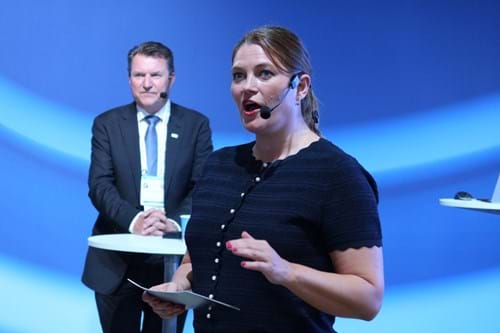
This was the central question when Energy Valley and DNV brought together authorities, industry, technology suppliers, and research communities for a security seminar at Høvik on 10 February.

The seminar took a distinctly national perspective, focusing on Norwegian frameworks, responsibilities, and practices, while also acknowledging the international links to technology development, supply chains, and security policy as an essential part of the backdrop.

A more complex risk landscape

A recurring insight throughout the day was that the risk picture in the energy system has become both more complex and more dynamic. Events that were previously considered extraordinary – whether digital, physical, or climate‑related – now appear to be part of a new normal.

Vulnerabilities increasingly arise:

  • at the interfaces between systems
  • in the dependencies between actors
  • and in the connection between physical and digital infrastructure

This places new demands on prevention, preparedness, and the ability to handle the unexpected.

The power system as a critical part of the energy system

Several presentations highlighted the power system as a critical component of the broader energy system, characterized by a high degree of digitalization and interconnection.

DNV’s presentations illustrated how:

  • physical incidents, climate extremes, and technical failures…
  • as well as digital vulnerabilities in components, control systems, and supply chains…

…can create system‑wide effects far beyond the power grid itself, thereby impacting society as a whole.

A key point was that robustness cannot be reduced to isolated technical measures. It must be understood as an interplay between:

  • technology and system design
  • organization and governance
  • competence and security culture

From analysis to practice

Perspectives from the energy industry emphasized that substantial work is already being done today within risk management, preparedness, and the protection of critical assets.

At the same time, it became clear that:

  • new value chains and energy solutions challenge established ways of working
  • hybrid threats blur the line between ICT security and physical security
  • collaboration across companies and sectors is becoming increasingly important

Robustness is therefore not only about managing known risks, but also about the ability to learn, adapt, and collaborate.

Collaboration and priorities going forward

The panel discussion tied the day’s themes together and highlighted the need for:

  • clearer understanding of roles and responsibilities
  • better mechanisms for sharing information and experience
  • more joint exercises and cross‑actor collaboration

There are no simple answers to how we strengthen the robustness of the energy system. But one conclusion stood out clearly:

This is not something that any single actor, sector, or technology can solve alone.

The road ahead

The seminar demonstrated the value of bringing diverse perspectives together around a shared understanding of risk and to discuss security and robustness as a system‑level responsibility, not as isolated issues.

The dialogue continued even after the formal program ended, through networking and conversations across disciplines; exactly as the event was intended to function.

Energy Valley and DNV thank all speakers, panellists, and participants for their openness and engagement, and we look forward to continuing the discussions!

A note from EU Advisor Knut Linnerud

If you are interested in taking this dialogue further – particularly at the intersection of AI, energy systems and security – we invite you to connect with us.

Energy Valley is currently advancing the next strategic phase of the AI Energy Cluster, where safety, resilience, and responsible implementation of AI in energy systems are central pillars. The initiative brings together industry, technology providers, research environments, and public stakeholders to strengthen practical deployment of AI in a secure and sustainable way.

We welcome companies and organizations that want to engage more closely in this work – whether through existing initiatives, pilot projects, or new collaborative ideas.

As EU Advisor at Energy Valley, I am also happy to support stakeholders in:

  • Mapping relevant European and national funding opportunities
  • Positioning existing initiatives within upcoming EU programmes
  • Developing new project concepts linked to AI, energy and security
  • Connecting with relevant partners across sectors and countries

If you see opportunities for collaboration, funding or strategic alignment, please don’t hesitate to reach out. The complexity of tomorrow’s energy system requires coordinated action – and we believe collaboration is the most powerful accelerator.

Knut Linnerud
Email Knut to get involved

Update from FEL

From left to right: Martina Civitella, Marianne Blikø, Mehdi Foroughi, Linnea Espevik, Bielenis Villanueva Triana, Maria Moræus Hanssen, Sebastian Kihle, Tobias Kern, Pawel Jaworski, Aurora Baardsen, Monique Swanepoel

Over the past year, Future Energy Leaders (FEL) Norway, in close dialogue with Energy Valley, have engaged in mentorship sessions, panels, and ecosystem events that brought emerging leaders together with experienced voices from across the energy sector.

Through conversations on leadership, technology, talent, and collaboration, the cohort has focused on learning leadership as a lived practice – one that is shaped by people, perspective, and real-world complexity.

Looking ahead, we are excited to continue this journey with more mentorship sessions, a planned visit to the Stortinget, and ongoing work on The Voice of FEL, a collective project capturing insights from our leadership dialogues. We also look forward to welcoming the group that will shape the second cohort of FEL Norway.

As we move into the year ahead, we welcome collaboration and dialogue with organisations and individuals who share an interest in developing future-ready energy leadership – feel free to reach out to our cohort leader Aurora Baardsen.

BalticSeaH2 podcasts are live!

The BalticSeaH2 project podcast is out! Why does hydrogen matter now, and what will decide whether it really scales?🎙️

The Hydrogen Valley Podcast is part of the BalticSeaH2 project and focuses on the conditions that shape the hydrogen economy in practice. The podcast looks at hydrogen beyond targets and announcements, with discussions on technology readiness, regulation, infrastructure, investments, and system-level choices that determine whether hydrogen can move from plans to implementation.

The first episodes will answer questions like:

  • Why are the opportunities for the hydrogen economy emerging now, and not ten years ago?
  • What applications does hydrogen genuinely make sense for – and where does it not? 
  • Why do investment decisions take time?

The first two episodes are available now on Spotify and Apple Podcasts! Find more information and episode descriptions on BalticSeaH2 website.

Episode 1

Why has hydrogen been used for decades, yet the hydrogen economy is only now taking shape? 🎙️

Hydrogen has long been part of industrial processes, but its role in energy and industrial transition discussions has expanded significantly in recent years.

Episode 1 of the Hydrogen Valley Podcast focuses on what has changed around hydrogen. Not the molecule itself, but the surrounding system. Energy markets, policy frameworks, technology development, and industrial demand now intersect in ways that were not in place before.

The discussion looks at why hydrogen is increasingly considered at system level and what conditions need to be in place for it to scale beyond established industrial use.

🎧 Guests in this episode:

Mika Järvinen, Associate Professor from Aalto University discusses what makes hydrogen technically different from other energy carriers and why scale changes the challenge.

Simo Säynevirta, Head of H2 Springboard ecosystem at ABB, explains how low-cost renewable electricity has reshaped where hydrogen makes sense.

Samuel Cross, PhD, Coordinator of Aalto University Hydrogen Innovation Center, looks at why hydrogen now addresses sectors that cannot be electrified directly and why earlier cost barriers mattered.

The episode places hydrogen in its system context and focuses on conditions rather than promises.

Episode 2

Are hydrogen projects overhyped, or do large industrial investments simply take time? 🎙️

Hydrogen projects are often described as delayed or uncertain. Episode 2 widens the lens and questions whether hydrogen is being judged differently from other large industrial transitions.

Hydrogen is sometimes described as the champagne of the green transition. Useful in the right context, but not something you would use to wash windows. That question runs through the episode. Where does hydrogen actually make sense economically, and where does it not?

In Episode 2 of the Hydrogen Valley Podcast, the discussion focuses on regulation, incentives, and investment decisions, and on why timelines matter.

🎧 Guests in this episode:

Christian Langen, Executive in Residence at Aalto University, discusses why long investment timelines are a normal feature of major industrial projects, not a hydrogen-specific problem.

Janne Peljo, Chief Policy Adviser at EK – Finnish Confederation of Industries, explains how regulation and incentives shape investment decisions and why predictability matters more than speed.

Jan Feller, CEO of the German-Finnish Chamber of Commerce, looks at hydrogen from an investor and industry perspective and asks where hydrogen genuinely makes sense, and where simpler solutions might do. Sometimes choosing hydrogen everywhere is like reaching for champagne where water would do.

The episode highlights the importance of realism, clear use cases, and stable frameworks when building new industrial value chains.

🔗 You can find these and upcoming episodes on both Spotify and Apple Podcasts. As well as direct links from the BalticSeaH2 podcast page.

Invitation to Energi2050 work meetings (in Norwegian)

Høyspenningslaboratorium. Foto: SINTEF

Energi2050 skal i løpet av 2026 utvikle en ny FoUI-strategi for hele energiområdet i Norge. Strategien skal svare ut mandatet som omfatter:

  • Produksjon, overføring og bruk av utslippsfri energi
  • Leting etter, utvinning og transport av petroleum
  • Fangst, transport og lagring av CO2
  • Havbunnsmineralvirksomhet

Energi2050 skal gi råd til Energidepartementet om FoUI innsats som bidrar til :

  • Energisikkerhet, konkurransekraft og verdiskaping på hele energiområdet
  • Langsiktig kunnskaps- og teknologiutvikling, en bærekraftig energiomstilling og en effektiv energiforsyning
  • En kostnadseffektiv og miljøvennlig utvikling mot et lavutslippssamfunn innen 2050

Involvering av fageksperter, universiteter, FoU- Institutter, næringsliv, industri, og myndigheter er avgjørende for kvaliteten til Energi2050 strategien. Energi2050 inviterer derfor til åpne arbeidsmøter innenfor temaene listet under, hvor formålet er å få identifisert og evaluert FoUI-behov, både på kort og lengre sikt. Resultatene fra arbeidsmøtene skal brukes av Energi2050-styret i deres prioriteringer av satsningsområder og tiltak for realisering.

Delta og bidra i arbeidet med Norges nye FoU-I strategi på energiområdet.

Påmelding må gjøres gjennom lenkene i tabellen på Energi2050 side

From Insight to Application: Lessons from Energy Valley’s EU Innovation Fund Workshop

Presentation during the workshop

On 22 January, Energy Valley hosted an EU Innovation Fund workshop in Fornebu, organised in collaboration with Innovayt and REspire. The workshop followed up on our Innovation Fund webinar held in December, and marked the next step in moving from general understanding to concrete project positioning.

The objective of the workshop was clear: to help companies better understand how Innovation Fund projects are actually evaluated, and to test early-stage project ideas against the programme’s key criteria through a practical project idea clinic.

What we learned

A central takeaway from the workshop was that none of the project ideas presented were sufficiently mature to be submitted to Innovation Fund calls with deadlines in 2026. This is not unusual, and should rather be seen as a valuable and realistic checkpoint early in the process.

At the same time, several participants clearly have project ideas with long-term potential, either:

  • within other EU or national funding programmes, or
  • as candidates for a future Innovation Fund call, for example in 2027, given the right development path.

The discussions highlighted that many companies underestimate the level of integration required across innovation, GHG avoidance, financial robustness and project maturity in order to be competitive in the Innovation Fund.

Looking into Part III: Next Steps

A format that works… but can be improved

The combination of:

  • a general introductory webinar, and
  • a physical workshop with expert input and an interactive idea clinic,

proved to be a strong and effective model. Participants gained clearer insight into evaluator logic and were able to stress-test their ideas in a constructive setting.

At the same time, the workshop confirmed that:

  • earlier clarification of what constitutes a relevant Innovation Fund project would benefit participants, and
  • more time is needed in the practical project discussions to allow deeper case-specific feedback.

For future editions, Energy Valley sees clear value in engaging with interested companies earlier in the process, through short preparatory webinars and/or individual meetings ahead of physical workshops.

Discussions during breaks

What this means for Energy Valley Members

Innovation Fund remains a highly relevant instrument for large-scale, impactful energy and decarbonisation projects – but it requires long-term preparation and realistic timing.

Energy Valley will continue to support members by:

  • providing early-stage guidance and reality checks,
  • facilitating dialogue with experienced advisors and evaluators, and
  • helping companies navigate the wider landscape of EU and national funding opportunities.

If your company is exploring project ideas that could be relevant for EU funding – whether in the short or longer term – we encourage you to reach out for a dialogue.

Key contacts for EU funding advisory

Energy Valley
Knut Linnerud – EU Advisor
📧 knut.linnerud@energyvalley.com
🌐 www.energyvalley.com

Innovayt
Daniel Gomes – Senior Consultant
📧 danielgomes@innovayt.eu
🌐 www.innovayt.eu

REspire
Erlend Aamodt – Managing Partner
📧 erlend@respire.icu
🌐 www.respire.icu

Recap: Subsea Seminar

The audience taking in one of the presentations

The subsea event on November 18th, 2025, gathered around 100 participants and created an engaging arena for discussing how Norway can maintain and strengthen its global subsea position toward 2030–2050. There was strong participation from across the industry: operators, suppliers, technology companies, and other industry representatives.

Opening of the Seminar

The seminar was opened with a welcome from Anne Line Haugen, Event and Marketing Advisor at Energy Valley, who handed the floor to Preben Strøm, the main moderator throughout the program.

Preben introduced the seminar theme: emphasizing the subsea industry as one of Norway’s strongest technological pillars, and a key enabler for both efficient oil and gas production and new value chains such as CCS and offshore wind.

Presentations and industry insights

The seminar featured several strong contributions from leading industry actors:

  • Equinor presented the development of All Electric Subsea and lessons from the Fram Sør project, the first deployment of the eVXT unit. The presentation highlighted how standardization and deep operator collaboration can reduce costs, accelerate field development, and support future tie-backs. 
  • Aker BP shared insights from its highly efficient field development model, the Subsea Alliance concept, and how standardized, reusable, and digital solutions contribute to reduced costs and timely project execution. 
  • 4Subsea highlighted how data, sensor technology, and predictive analytics provide improved decision support and can extend asset lifetime, reduce emissions, and enhance integrity across subsea infrastructure. 
  • OneSubsea presented its technology roadmap for the next generation of subsea systems, with a strong focus on modularization, collaboration, and reducing environmental footprint. 
  • DNV provided a long-term perspective on subsea’s role in the energy transition toward 2050 and 2060, including global subsea market growth and the importance of standardization, digitalization, and integrated energy systems. 

Panel discussion

Following the presentations, we moved into a panel discussion, moderated by Knut Linnerud (Energy Valley), with an exceptionally active audience, contributing the majority of the questions. This resulted in a dynamic and insightful dialogue about the future of subsea solutions.

Key discussion themes included:

  • How Norway can strengthen its international subsea position toward 2050
  • Transferring offshore oil and gas competence to CCS, offshore wind, and new value chains
  • Balancing long-term gas demand toward 2060 with the need for energy transition
  • Digitalization, standardization, and collaboration as key industry drivers
  • Regulatory and market mechanisms needed to accelerate innovation and investment

Closing

Preben Strøm closed the seminar with a brief summary of key takeaways, thanking the speakers and participants for their engagement and contributions to an important discussion on the opportunities and transformations facing the subsea industry.

A few images from the event…

What’s next?

The subsea industry remains one of the most pressing energy topics of our time. As a follow-up to the strong engagement from the November event, Energy Valley is planning the next Subsea member event in March 2026. This event will also be in person.

We are currently exploring collaboration with one of our key industry partners to host a combined site visit and seminar, giving members exclusive insight into state-of-the-art subsea facilities and forward-looking technology developments. Details regarding location, host and exact date will be announced shortly, so stay tuned! This will be a unique opportunity to meet industry peers, see cutting-edge subsea technology up close, and gain insight into the innovations shaping the next decade.

BalticSeaH2 awarded Hydrogen Valley of the Year

Accepting the award

The €33 million BalticSeaH2 project is building a hydrogen valley across the Baltic Sea region, connecting hydrogen production, distribution, processing and use.

The European H2 Valley of the Year Award honours exceptional achievements in the development and implementation of Hydrogen Valleys. Criteria for the evaluation are breakthroughs in project implementation, outstanding efforts in covering the value chain, hydrogen volume produced/used in the valley, the stakeholders’ landscape and involvement, as well as the innovation level.

BalticSeaH2 builds the first significant, cross-border hydrogen valley in Europe. The goal is to create an integrated hydrogen economy around the Baltic Sea to enable self-sufficiency of energy and minimise carbon emissions from different industries. Combining local areas into a broader valley supports creating a genuinely integrated, interregional hydrogen economy, which has not been done previously on this scale in Europe.

This award highlights that a European hydrogen economy will only succeed if it is built together across borders. Large-scale cooperation in the Baltic Sea region proves that shared ambition can drive real progress”, says Jatta Jussila, CEO of CLIC Innovation.

The project started in 2023 and runs for five years. The consortium includes 40 partners from nine Baltic Sea region countries: Finland, Estonia, Latvia, Lithuania, Poland, Germany, Denmark, Norway, and Sweden, with Energy Valley leading the Norway-specific Connected Valley activities. The project is coordinated by CLIC Innovation, an open innovation cluster based in Finland, that facilitates RDI cooperation across sectors for the sustainability transition. Gasgrid Vetyverkot is a facilitator for the collaboration in the project.

“The BalticSeaH2 project is important for moving the hydrogen economy – and energy transition – forward in Europe,” says Energy Valley CEO, Vibeke Østlyngen. “We’re proud to be a part of it and excited to see it get such positive, well-deserved attention.”

The funder, Clean Hydrogen Partnership, presented awards to its leading projects at a ceremony on 24 November 2025. The Clean Hydrogen Partnership is a public-private partnership supporting research and innovation activities in the hydrogen sector across Europe. Through this partnership, BalticSeaH2 is co-funded by the European Union.

Susanna Kupiainen accepted the award on behalf of the valley.

Meet our CEO and Chairperson

Energy Valley CEO Vibeke Østlyngen and Chairperson Vilde Bjerknes

You might have noticed there have been a few changes at Energy Valley in the last several months. However, while we announced a shift in CEOs, we haven’t spoken broadly about our new Chairperson of the Board yet. So, we’d like to take the opportunity now to introduce you to our new Chairperson, as well as go a bit more in-depth with our CEO in this interview with the two of them.

In Q3 2025, Vibeke Østlyngen stepped into the role of (interim) CEO after having worked in Energy Valley as the Head of Projects and Administration since 2023. Around the same time, Vilde Bjerknes, who has been a member of the Board for over a year, stepped into the role of Chairperson of the Board. 

Now, while it’s human nature to be nervous about change, the latest changes in Energy Valley leadership are not so much massive changes as they are a natural shift with a renewed focus on what the cluster needs to continue to grow and bring additional value to our members.

“For the Energy Valley cluster, I think the role change represents stability and continuity,” confirms Vibeke. “There will be a continuation in the cluster administration, as I have been in Energy Valley since the end of 2023, and worked closely with both the previous CEOs Preben Strøm and Bjørn Ottar Elseth.”

The sentiment was similar from Vilde who said, “I don’t think the change will be jarring, as I will be continuing on much of the work from my predecessors. As Chair of the Board, I have the opportunity to follow the Energy Valley administration closely through Vibeke, and what excites me is the opportunity to support the good work being done among the members and catered for by the Energy Valley team. I truly believe that clusters like Energy Valley play an important role in developing the energy industry, and I look forward to continuing to be a part of it.”

Continuity and collaboration

Having already worked together for some time now, both women see collaboration as one of the key strengths going forward.

“The way I see it, my role is twofold: make sure the Board functions as a place where we can discuss and set a direction for Energy Valley that reflects the needs and expectation of the members,” says Vilde. “In addition, I will support Vibeke in executing the strategy the best I can; I hope to be a valuable sparring partner for her and the team, helping enable Vibeke, together with the administration, in ensuring Energy Valley delivers on the projects and cluster activities from day-to-day.”

“In Energy Valley, we are fortunate to have an active and supporting Board focusing on the future of the cluster, and caring for how we support our members,” confirms Vibeke. “Vilde and I support each other in driving Energy Valley forward – I focus on the operational part and she more so on the strategic side.”

And as Vibeke likes to say, “Cooperation, curiosity, and an open mind will always bring us forward faster.”

What does success look like?

As Vilde points out, the energy business is in the middle of a transformation, presenting both significant opportunities and some challenges for our members.

“Energy Valley has a solid member base and a well-established approach to supporting the members in developing their business accordingly,” she notes. “But funding may be a challenge going forward, and I believe that we must look for extended cooperation and potentially new structures to secure a robust cluster for the future.”

“Success in the cluster is seeing the members and partners being activity involved preparing the energy system for the future,” says Vibeke. “For the cluster administration, that means we are facilitating a good environment for collaboration.”

Part of facilitating that good environment is having a broad understanding of what other organisations in the energy space – and even other nations – are focusing on and continuously developing industry knowledge. Later this month, Vibeke and Vilde are paying a visit to the Danish energy cluster to do exactly that.

“We sometimes work together with Energy Cluster Denmark on projects, such as a cooperation project with Energy Cluster Denmark funded by Viken, and the currently on-going BalticSeaH2 project,” says Vibeke, “and really appreciate the opportunity for knowledge-sharing with them.”

Keeping the members front and centre

No matter who you ask in Energy Valley, the members are always the primary focus for all of us. And if you are a member (or considering becoming one!), we’d like to hear from you.

“To deliver value, we must understand our members’ needs, so I encourage everyone to suggest and promote activities they find valuable. Energy Valley should be defined by its members. The role of both the team and the board is simply to support the community and help it thrive,” concludes Vilde.

Reflections from Oslo Innovation Week

Panel discussion

During Oslo Innovation Week, Energy Valley held a two-session event, together with Capgemini. Here are some of the key takeaways…

SESSION I

Building the Future of Talent

What does it really take to build global companies out of Norway — and what kind of leadership and talent will define our next chapter? At our “Building the Future of Talent” session during Oslo Innovation Week, Energy Valley’s Preben Strøm explored these questions together with John Markus Lervik (Cognite), Snorre Valdimarsson (Thommessen) and two outstanding Future Energy Leaders — Shipra Mohan and Bielenis Villanueva Triana.

Discussion on what it takes to be successful in the drive for talent

A few takeaways stood out:

💡 “The combination of grit and deep domain competence is crucial for success when building a global tech company.”

  • John Markus Lervik, reminding us that endurance and expertise matter more than hype – and that life balance, not work/life balance, is what truly counts.

💡 “We should nurture and support business talents the same way we do with sports talents.”

  • Norway needs to get better at identifying and investing early in people who can scale ideas globally.

💡 “The best and most efficient employees are women with small kids.” 

  • Snorre Valdimarsson highlighted that diversity is not just fair, it’s efficient – and that inclusion is a competitive advantage.

💡 “Norway is a great country to live in – and to build your career.”

  • As one of our Future Energy Leaders put it.
Panel discussion: Building the Future of Talents

At the core of the discussion was a shared belief:
👉 Talent is Norway’s most important resource, but how we develop, empower and trust that talent will determine whether we stay a local success story or become a truly global one.

SESSION II

The Power of Energy Efficiency in Industry Innovation

Alexander Glowacki (Senior Lead Strategist & People Manager, Strategy, Design & AI, frog, part of Capgemini Invent) had some key takeaways from the second session of the day. Here’s what he had to say…

Most people agree that great collaboration drives innovation. Yet, establishing valuable partnerships remains a challenge.

During Oslo Innovation Week, we tackled this topic through an intimate workshop on energy efficiency collaboration. Together with Simoen Moxnes from Equinor and Gina Arnestad from Statnett, we identified real barriers and actionable solutions for founder-corporate partnerships.

Equinor: the energy transition IS happening!

Three key barriers

Speed mismatch:
Startups need to move fast to survive. Industry majors need time to navigate complex decision-making. This creates friction.

Navigation complexity:
The sheer size of corporations makes it difficult for younger companies to identify the right entry points for partnerships.

Communication gaps:
Misaligned language and expectations create friction. What startups call “partnership” might mean something entirely different to a corporate.

Gina Arnestad, Statnett

The good news…

Don’t worry, in spite of the barriers, it’s not all doom and gloom! Progress IS happening! Equinor is engaging with Innovation Dock and StartupLab. Statnett has built a portal for partnership submissions.

But we need continued dialogue to bridge the existing gaps.

Here’s a perspective shift: innovation in energy efficiency isn’t new. In the early 1900s, whale oil dominated lighting before kerosene took over. Today, LED technology reigns supreme.

So, here’s a question for us all to contemplate: What will be the “whale oil” of our time? What seems essential today but will be obsolete in 20 years?

Tomorrow Show 2025: AI and Collaboration at the Core

Preben Strøm onstage at Tomorrow Show 2025

On Thursday, September 25, Tomorrow Show 2025 brought together leading figures in digitalization, energy, and technology at The Hub. The conference focused on how artificial intelligence, data, and cross-industry collaboration are driving new business models, transforming work processes, and influencing geopolitics and security.

Energy Valley’s CCO, Preben Strøm, gave a presentation on behalf of the cluster, delivering a clear message about the importance of collaboration across value chains. He emphasized the need to strengthen small and medium-sized enterprises (SMEs) through skills development and partnerships, enabling them to play an active role in the digital and green transition. His presentation was well received and positioned Energy Valley as a key voice in the discussion on how Norwegian players can become part of a global digital ecosystem.

Knut Linnerud, Energy Valley’s EU advisor and project manager for the AI Energy Cluster, was also in attendance and took the opportunity to follow the presentations on stage and network with key representatives from business, technology, and research communities.

AI Energy Cluster: Energy Valley’s AI Initiative

Alongside participation in the conference, Energy Valley is actively working to further develop the AI Energy Cluster—an initiative that brings together energy companies, tech firms, R&D actors, and SMEs in a joint effort to integrate artificial intelligence into the energy system.

The goals:

  • Create a structured collaboration platform for AI in the energy sector
  • Build expertise and practical case studies through webinars, workshops, and professional gatherings
  • Identify concrete project opportunities and connect them to national and international funding schemes
  • Position Norwegian players in larger European initiatives, such as Horizon Europe and Digital Europe

Currently, we are working with our partners to chart the path forward, with a clear ambition to strengthen collaboration and build an AI and energy ecosystem that delivers tangible results and new opportunities for our members.

The road ahead

Tomorrow Show 2025 clearly demonstrated that AI, data, and digitalization are no longer add-ons—they are the foundation for future value creation, security, and competitiveness. For Energy Valley, this is a strong confirmation that we are on the right track with the AI Energy Cluster—and that collaboration between major players, SMEs, and research communities is the key to unlocking its potential.

Want to get involved?

If you’re interested in joining Energy Valley’s AI Energy Cluster or want more information, reach out to Knut Linnerud (email) or (mobile: +47 922 25 432).