Tomorrow Show 2025: AI and Collaboration at the Core

Preben Strøm onstage at Tomorrow Show 2025

On Thursday, September 25, Tomorrow Show 2025 brought together leading figures in digitalization, energy, and technology at The Hub. The conference focused on how artificial intelligence, data, and cross-industry collaboration are driving new business models, transforming work processes, and influencing geopolitics and security.

Energy Valley’s CCO, Preben Strøm, gave a presentation on behalf of the cluster, delivering a clear message about the importance of collaboration across value chains. He emphasized the need to strengthen small and medium-sized enterprises (SMEs) through skills development and partnerships, enabling them to play an active role in the digital and green transition. His presentation was well received and positioned Energy Valley as a key voice in the discussion on how Norwegian players can become part of a global digital ecosystem.

Knut Linnerud, Energy Valley’s EU advisor and project manager for the AI Energy Cluster, was also in attendance and took the opportunity to follow the presentations on stage and network with key representatives from business, technology, and research communities.

AI Energy Cluster: Energy Valley’s AI Initiative

Alongside participation in the conference, Energy Valley is actively working to further develop the AI Energy Cluster—an initiative that brings together energy companies, tech firms, R&D actors, and SMEs in a joint effort to integrate artificial intelligence into the energy system.

The goals:

  • Create a structured collaboration platform for AI in the energy sector
  • Build expertise and practical case studies through webinars, workshops, and professional gatherings
  • Identify concrete project opportunities and connect them to national and international funding schemes
  • Position Norwegian players in larger European initiatives, such as Horizon Europe and Digital Europe

Currently, we are working with our partners to chart the path forward, with a clear ambition to strengthen collaboration and build an AI and energy ecosystem that delivers tangible results and new opportunities for our members.

The road ahead

Tomorrow Show 2025 clearly demonstrated that AI, data, and digitalization are no longer add-ons—they are the foundation for future value creation, security, and competitiveness. For Energy Valley, this is a strong confirmation that we are on the right track with the AI Energy Cluster—and that collaboration between major players, SMEs, and research communities is the key to unlocking its potential.

Want to get involved?

If you’re interested in joining Energy Valley’s AI Energy Cluster or want more information, reach out to Knut Linnerud (email) or (mobile: +47 922 25 432).

Join us in nominating Bærum’s Entrepreneur of the Year 2025!

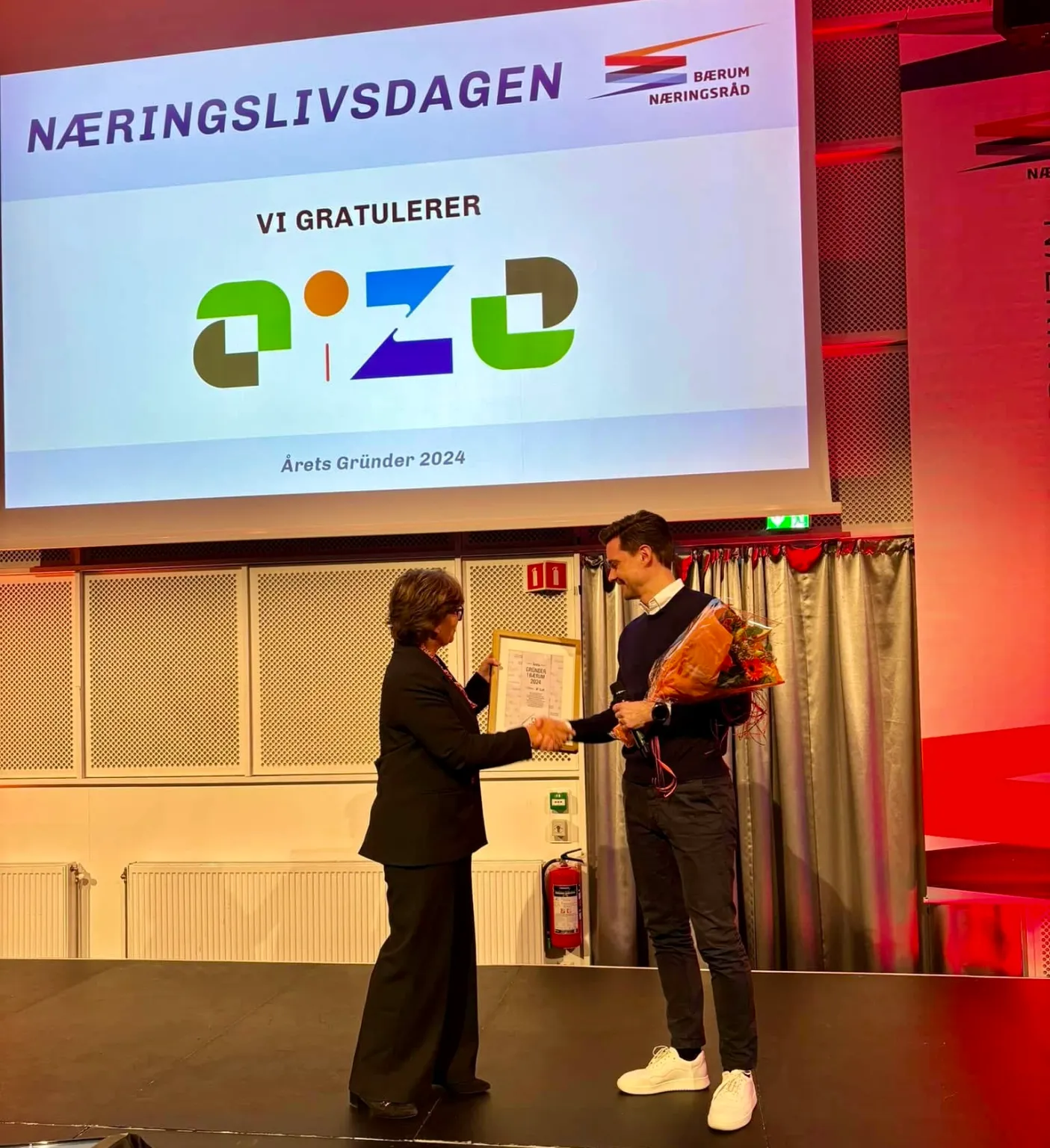
Award ceremony from Årets Gründer 2024

Nominate your candidate for Bærum’s Entrepreneur of the Year, and help shine a spotlight on those building the business landscape of tomorrow.

Energy Valley is part of the jury for “Årets gründer i Bærum 2025” (Entrepreneur of the Year 2025) for Bærum Næringsråd and we’d like your input. Do you have any candidates in mind for nomination?

The prize, which will be presented on 20 November, is awarded to companies that stand out for their innovation, drive, and commitment to sustainability. It honours entrepreneurs who have established themselves in Bærum within the past five years. Entrepreneurs are hardworking and courageous individuals with a product or idea they believe in—contributing to innovation and value creation.

If you know someone who deserves to be celebrated, we’d love to hear from you as soon as possible. Please send all nominations to Vibeke Østlyngen no later than 27 October (so we have time to pass those nominations on!)

To learn more about the criteria, take a look at the article (in Norwegian) on Bærum Næringsråd’s website.

Recap: New Energy Women in Stavanger

The event was focused on “Hydrogen: From ambition to reality” and was aimed at expanding professional networks within the hydrogen space as well as building on NEW members’ understanding of the green hydrogen opportunities and challenges, technology, and value chain.

CEO Vibeke Østlyngen was in attendance and had this to say about it:

It was a powerful afternoon at Worley Rosenberg last week when 80+ women gathered to discuss the green hydrogen opportunities and challenges, technology and value chain.

Main takeaways:

  • We need common policies and regulations to standardise
  • The European hydrogen market is growing — slowly but steadily
  • Cost must come down, and it must be more expensive to pollute – CO2 pricing will be a gamechanger

Special thanks to Oriana Duran and Worley Rosenberg for hosting the event and to the NEW initiative for organizing, together with Women in Green Hydrogen.

➡️ The New Energy Women (NEW) initiative is a cooperation between ABB and some of the energy clusters in Norway: H2Cluster, Norwegian Offshore Wind Cluster, Energy Valley, and Fornybar Norge.

Additional takeaways

H2Cluster also took part in the event and had these key points:

🔺 Trust among stakeholders is critical to mature projects.

🔺 Concerns around the slow pace of project development in Europe.

🔺 Global momentum is strong: Brazil, Australia, North Africa, China, and the Middle East are moving fast.

🔺 Chinese electrolyzer OEMs offering CAPEX benefits that may outweigh European subsidies.

Want to get involved?

Stay tuned for the next New Energy Women gathering coming up as we will visit Rystad Energy in Oslo.

Recap in pictures

Did you miss the event? Here are a few of our favourite pictures from the event:

Arendalsuka 2025 recap

Event participants ahead of the two panel discussions

Together with Capgemini, Energy Valley was proud to host an event focused on the electricity crisis and its impact on industry at this year’s Arendalsuka.

The problem: Norway’s electricity grid doesn’t have the capacity to meet the demand from new industries, electrification, and the green transition. This is resulting in delayed investments, high prices, and — in the worst cases — power outages.

Multiple reports (including Riksrevisjonen’s “Kapasiteten i strømnettet“) have confirmed: we need more capacity, a better grid, and smarter solutions. But how do we get there?

The hour-long event was split into two panels and took a look at the situation surrounding Norway’s power system, tackling topics such as:

  • What the authorities are doing to ensure sufficient grid capacity
  • Whether digital control, local production, and battery technology can give industry greater flexibility
  • Whether small, modular reactors are part of the solution… or merely a distraction
  • How software, data, and AI can be used to optimize energy usage

During the lively event, participants delved into what was more than just a debate. It was a conversation about the future of Norwegian industry, technology, and green growth.

Key takeaways

Energy Valley’s Knut Linnerud wrapped up the event with a summary of some of the key points made:

  • Firstly, the session clearly demonstrated that the challenges in the power system are significant… but they are NOT insurmountable and the solutions are already well known.
  • Yara emphasized that expanding the grid is absolutely crucial for continued industrial development.
  • At the same time, Morrow highlighted how battery technology can contribute to power balance and flexibility within the system.
  • A key starting point for Norway is that we already possess a form of “battery capacity” through our water reservoirs, which is equivalent to millions of car batteries. This gives us a unique opportunity to further balance power in collaboration with Europe, ensuring more stability and affordable access to electricity.
  • Effective power balancing is the key to succeeding in the transition to renewable energy and securing sufficient electricity. Everything is interconnected (as Gro Harlem Brundtland notably said in the context of climate challenges) and the ability to execute is critical.
  • Coordinated, concrete plans and actions are required between industry, the energy sector, and government.

We’d like to issue a big THANK YOU to all who participated in the event and those who came out to watch it live. If you missed the event (or would like a reminder of it) take a look at the slideshow below.

Participants

Gry Helene Pettersen – Vice President, Capgemini Invent

Annette Gohn-Hellum – Ekspedisjonssjef, Riksrevisjonen

Anne Sagstuen Nysæther – Administrerende direktør, Elvia

Morrow Batteries – Lars Christian Backer, Administrerende direktør, Morrow Batteries

Inga Nordberg – Direktør Energi og konsesjon, NVE

Ole-Jakob Siljan – VP and Head of Yara Technology center and Yara Porsgrunn, Yara International

John Olav Tande – SVP R&D and Innovation, Statnett

Lene Westgaard-Halle – Stortingsrepresentant, Høyre

Sigurd Rafaelsen – Stortingsrepresentant, Ap

Knut Linnerud – EU Advisor, Energy Valley

Recap in pictures

Did you miss the event? Check out our slideshow:

Recap from the 2025 Industry-Science Meetup

Energy Valley CEO Bjørn Ottar Elseth sets the stage

Energy Valley was proud to host its Industry-Science Meetup together with SINTEF and the University of Oslo.

The half-day event offered short, engaging talks showcasing cutting-edge research, industrial technology projects, and successful partnerships between academia and business.

Agenda

13:30 Registration and mingling

Welcome to Industry Science Meetup 2025

UIO // Advanced biogas-to-methanol electrocatalysis by Petra Agota Szilagyi

Wind Catching System // Developing Scalable Offshore Wind capacity by Daniel Engelhart-Willoch

SINTEF // Fiber Optics in Geosciences by Marcin Duda

DNV // Industrial AI: Assurance, Risks, and Opportunities for the Energy Sector by Carla Ferreira

UIO // Hydrogen – New Challenges and Emerging Debates by Xi Yang

15:30 Coffee & Mingling

Hystar // Hypilot – Ultraefficient green hydrogen production by Eddy Van Oort

SINTEF // Endpoint AI – some hardware-platforms to consider by Benedikt Andreas Mithassel

UIO // Numerical and physical wave tanks by Atle Jensen

17:00 Finish

Did you miss the event? Take a look at some pictures from the day in our slideshow on LinkedIn!

Tilskudd til forskning og innovasjon i bedrift

Små og mellomstore bedrifter i Akershus kan nå søke om tilskudd for å bruke forskning i utviklingen av nye produkter og løsninger. Målet med ordningen er å styrke innovasjonsevnen og konkurransekraften i næringslivet gjennom støtte til forsknings- og innovasjonsprosjekter.

Hvem kan søke?

Ordningen er åpen for små og mellomstore bedrifter organisert som aksjeselskaper, samt foretak registrert i Enhetsregisteret som driver jordbruksproduksjon. Bedriften må ha lønnede ansatte både på søknadstidspunktet og i prosjektfasen, samt være registrert med forretningsadresse i Akershus.

Hva kan dere få støtte til?

Tilskuddet kan dekke inntil 50 % av de totale prosjektkostnadene for forsknings- og innovasjonsprosjekter. En forutsetning er samarbeid med en godkjent forskningsinstitusjon, og forskningen må utgjøre en nødvendig del av prosjektet. Dette må gjenspeiles i budsjettet.

Hvor mye støtte kan dere få?

Bedrifter kan søke om inntil 750 000 kroner per prosjekt. Prosjektperioden kan være opptil ett år. Totalt er det satt av 10 millioner kroner til ordningen i 2025.

Viktige frister

Det er to søknadsfrister i 2025: 2. mai og 1. november. Dersom det gjenstår midler, vil det være mulig å søke på nytt senere samme år.

Hvordan søker dere?

Søknad sendes via regionalforvaltning.no. Før dere søker, er det viktig å lese retningslinjene som gir utfyllende informasjon om søknadskriterier og vurderingsprosessen.

Behandling og utbetaling

Søknader behandles innen én til to måneder. Søkere som får innvilget tilskudd, må returnere akseptbrev og kan deretter be om utbetaling gjennom regionalforvaltning.no.

Hvorfor deler Energy Valley denne informasjonen?

Energy Valley arbeider for å styrke innovasjon og samarbeid i energisektoren. Dette tilskuddet gir bedrifter en unik mulighet til å finansiere forskningsbaserte utviklingsprosjekter, noe som er avgjørende for økt verdiskaping og konkurransekraft.