From left to right: Bielenis Villanueva Triana, Marianne Blikø, Aurora Høines Baardsen, Monique Swanepoel, Ida Lindtveit Røse, Linnea Espevik, Tommy Haugen, Pawel Jaworski, Martina Civitella, Mehdi Foroughi
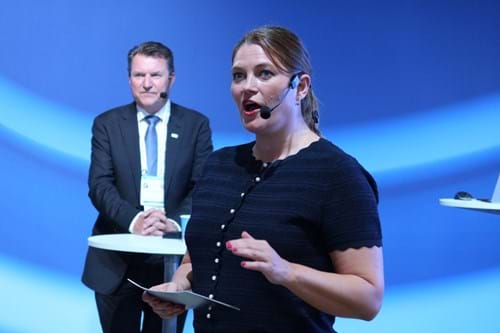
On 04 March, the FEL Norway cohort visited Stortinget and spent time with Ida Lindtveit Røse, deputy leader of the Kristelig Folkeparti.
Experience from the FEL perspective
Ida shared her journey from serving on her school’s student council, through youth politics, to her current roles as Member of Parliament, parliamentary leader, and deputy leader.
Some key takeaways from the discussion with Ida: 👉 Say yes to challenges – people rarely ask you to take on responsibility unless they believe you are capable of it. 👉 Build a feedback culture where giving and receiving constructive input is normal. The ability to handle honest, critical feedback is essential for growth as both a leader and a community. Without it, unhealthy cultures can take root. 👉 As a (young) leader, it helps to remember that no one expects you to have all the answers. Trust your team, surround yourself with strong people, and let them contribute.
Members of the FEL cohort, listening in
“It was inspiring to meet such a passionate leader and hear how the support of others has shaped her journey.”
Robustness in an increasingly complex energy system
How do we strengthen the robustness of an integrated energy system when the threat landscape is becoming more complex across technologies, actors, and types of risk?
This was the central question when Energy Valley and DNV brought together authorities, industry, technology suppliers, and research communities for a security seminar at Høvik on 10 February.
The seminar took a distinctly national perspective, focusing on Norwegian frameworks, responsibilities, and practices, while also acknowledging the international links to technology development, supply chains, and security policy as an essential part of the backdrop.
A more complex risk landscape
A recurring insight throughout the day was that the risk picture in the energy system has become both more complex and more dynamic. Events that were previously considered extraordinary – whether digital, physical, or climate‑related – now appear to be part of a new normal.
Vulnerabilities increasingly arise:
at the interfaces between systems
in the dependencies between actors
and in the connection between physical and digital infrastructure
This places new demands on prevention, preparedness, and the ability to handle the unexpected.
The power system as a critical part of the energy system
Several presentations highlighted the power system as a critical component of the broader energy system, characterized by a high degree of digitalization and interconnection.
DNV’s presentations illustrated how:
physical incidents, climate extremes, and technical failures…
as well as digital vulnerabilities in components, control systems, and supply chains…
…can create system‑wide effects far beyond the power grid itself, thereby impacting society as a whole.
A key point was that robustness cannot be reduced to isolated technical measures. It must be understood as an interplay between:
technology and system design
organization and governance
competence and security culture
From analysis to practice
Perspectives from the energy industry emphasized that substantial work is already being done today within risk management, preparedness, and the protection of critical assets.
At the same time, it became clear that:
new value chains and energy solutions challenge established ways of working
hybrid threats blur the line between ICT security and physical security
collaboration across companies and sectors is becoming increasingly important
Robustness is therefore not only about managing known risks, but also about the ability to learn, adapt, and collaborate.
Collaboration and priorities going forward
The panel discussion tied the day’s themes together and highlighted the need for:
clearer understanding of roles and responsibilities
better mechanisms for sharing information and experience
more joint exercises and cross‑actor collaboration
There are no simple answers to how we strengthen the robustness of the energy system. But one conclusion stood out clearly:
This is not something that any single actor, sector, or technology can solve alone.
The road ahead
The seminar demonstrated the value of bringing diverse perspectives together around a shared understanding of risk and to discuss security and robustness as a system‑level responsibility, not as isolated issues.
The dialogue continued even after the formal program ended, through networking and conversations across disciplines; exactly as the event was intended to function.
Energy Valley and DNV thank all speakers, panellists, and participants for their openness and engagement, and we look forward to continuing the discussions!
A note from EU Advisor Knut Linnerud
If you are interested in taking this dialogue further – particularly at the intersection of AI, energy systems and security – we invite you to connect with us.
Energy Valley is currently advancing the next strategic phase of the AI Energy Cluster, where safety, resilience, and responsible implementation of AI in energy systems are central pillars. The initiative brings together industry, technology providers, research environments, and public stakeholders to strengthen practical deployment of AI in a secure and sustainable way.
We welcome companies and organizations that want to engage more closely in this work – whether through existing initiatives, pilot projects, or new collaborative ideas.
As EU Advisor at Energy Valley, I am also happy to support stakeholders in:
Mapping relevant European and national funding opportunities
Positioning existing initiatives within upcoming EU programmes
Developing new project concepts linked to AI, energy and security
Connecting with relevant partners across sectors and countries
If you see opportunities for collaboration, funding or strategic alignment, please don’t hesitate to reach out. The complexity of tomorrow’s energy system requires coordinated action – and we believe collaboration is the most powerful accelerator.
From left to right: Martina Civitella, Marianne Blikø, Mehdi Foroughi, Linnea Espevik, Bielenis Villanueva Triana, Maria Moræus Hanssen, Sebastian Kihle, Tobias Kern, Pawel Jaworski, Aurora Baardsen, Monique Swanepoel
Over the past year, Future Energy Leaders (FEL) Norway, in close dialogue with Energy Valley, have engaged in mentorship sessions, panels, and ecosystem events that brought emerging leaders together with experienced voices from across the energy sector.
Through conversations on leadership, technology, talent, and collaboration, the cohort has focused on learning leadership as a lived practice – one that is shaped by people, perspective, and real-world complexity.
Looking ahead, we are excited to continue this journey with more mentorship sessions, a planned visit to the Stortinget, and ongoing work on The Voice of FEL, a collective project capturing insights from our leadership dialogues. We also look forward to welcoming the group that will shape the second cohort of FEL Norway.
As we move into the year ahead, we welcome collaboration and dialogue with organisations and individuals who share an interest in developing future-ready energy leadership – feel free to reach out to our cohort leader Aurora Baardsen.
Join us in nominating Bærum’s Entrepreneur of the Year 2025!
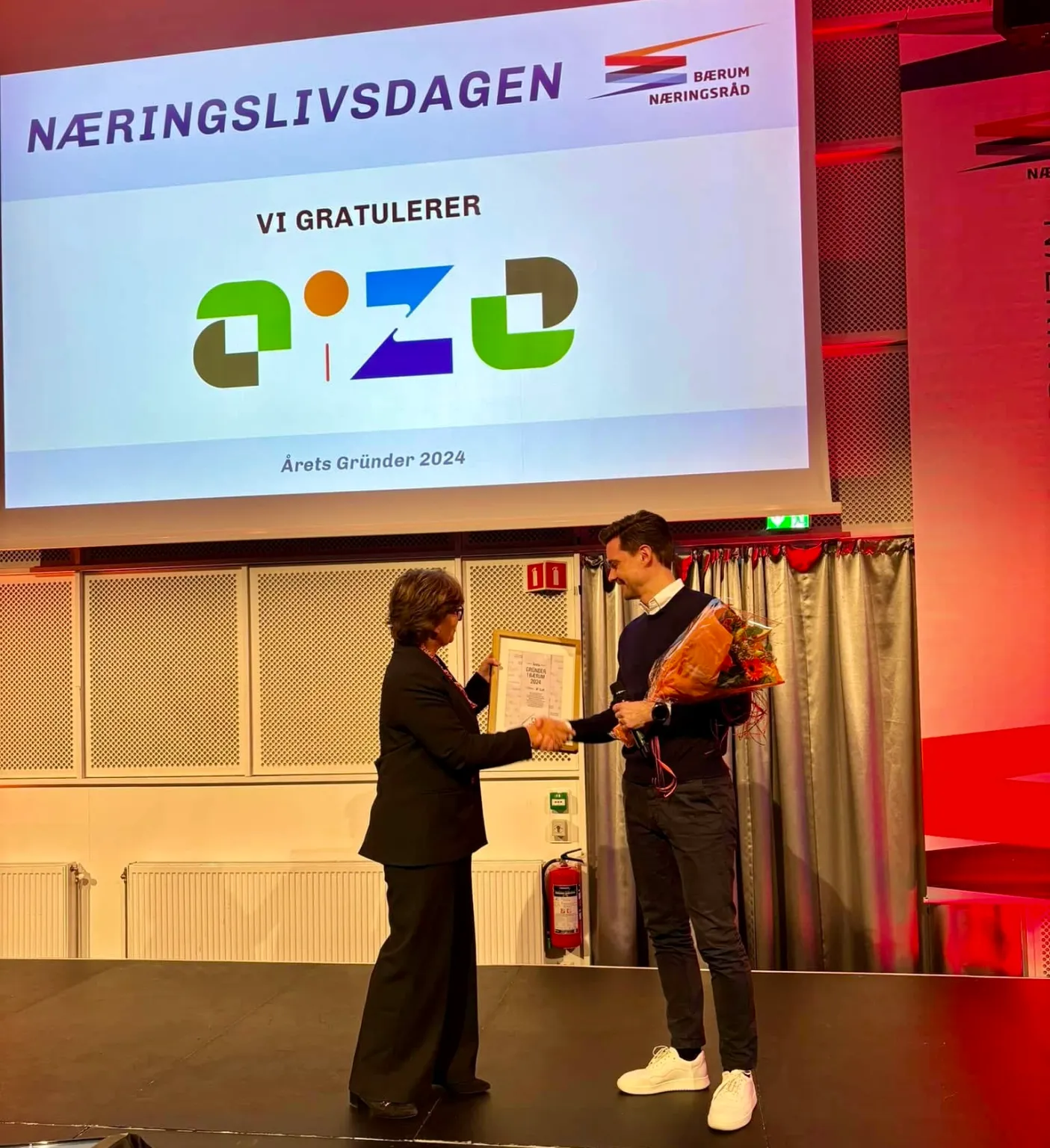
Award ceremony from Årets Gründer 2024
Nominate your candidate for Bærum’s Entrepreneur of the Year, and help shine a spotlight on those building the business landscape of tomorrow.
Energy Valley is part of the jury for “Årets gründer i Bærum 2025” (Entrepreneur of the Year 2025) for Bærum Næringsråd and we’d like your input. Do you have any candidates in mind for nomination?
The prize, which will be presented on 20 November, is awarded to companies that stand out for their innovation, drive, and commitment to sustainability. It honours entrepreneurs who have established themselves in Bærum within the past five years. Entrepreneurs are hardworking and courageous individuals with a product or idea they believe in—contributing to innovation and value creation.
If you know someone who deserves to be celebrated, we’d love to hear from you as soon as possible. Please send all nominations to Vibeke Østlyngenno later than 27 October (so we have time to pass those nominations on!)
To learn more about the criteria, take a look at the article (in Norwegian) on Bærum Næringsråd’s website.